

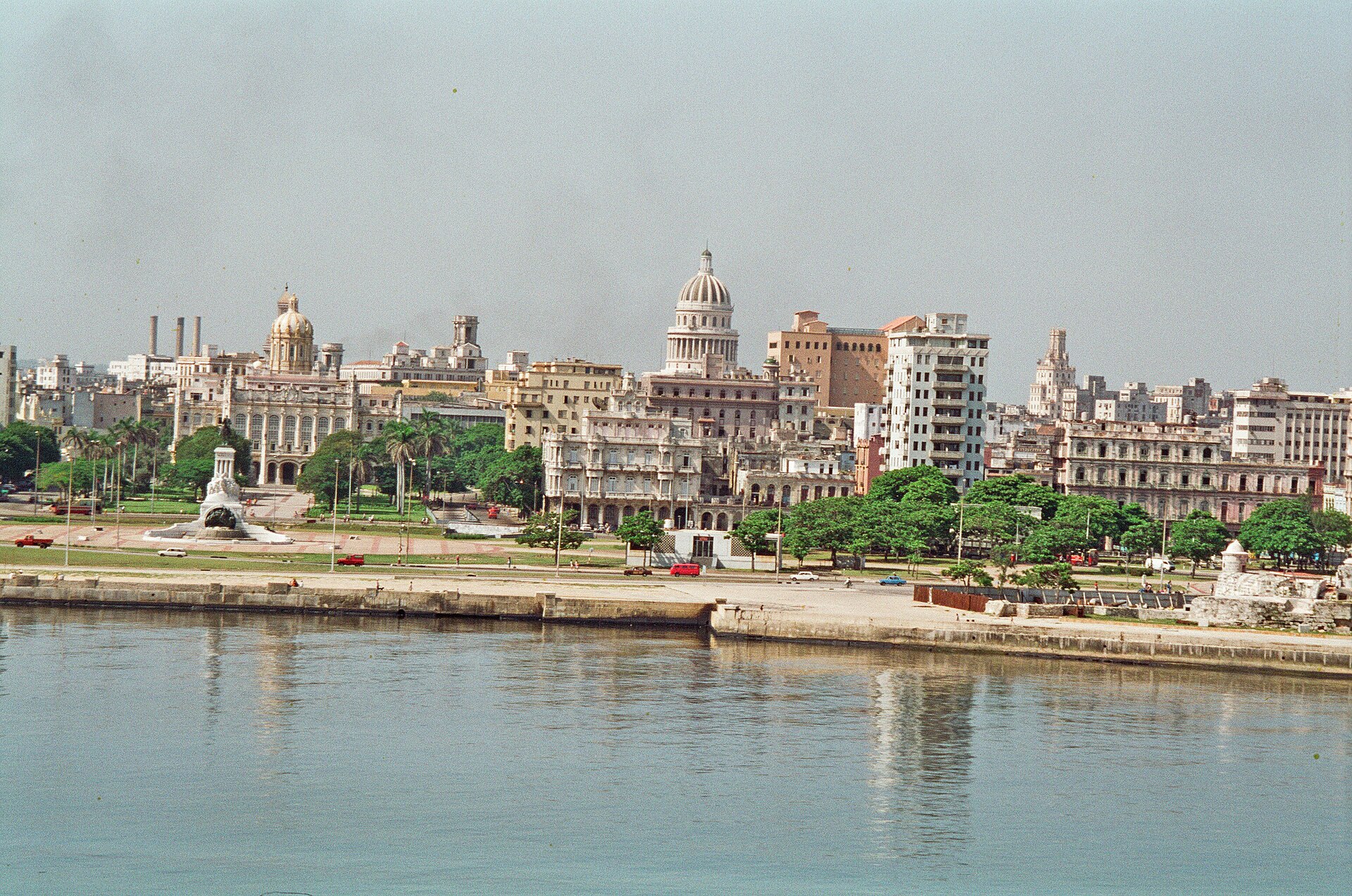
Miguel Díaz-Canel once again reached out to Washington on Friday, November 20. He did so, however, with the same condition as always: any rapprochement must come “without pressure, without conditions and without questioning our political system, our sovereignty and our self-determination.”
That the Cuban ruler is talking about dialogue says a lot. The regime knows that the policy of Donald Trump and his secretary of state, Marco Rubio, is serious, and that the time for empty promises is running out.
Dialogue among rifles
The chosen setting was not a negotiating table but a military exercise. Díaz-Canel spoke to more than a hundred university students during a shooting drill of the so-called University Student Bastion, at a tank unit, as part of National Defense Day. He was accompanied by Armed Forces Minister Gen. Álvaro López Miera and Interior Minister Gen. Lázaro Alberto Álvarez Casas.
At universities across the country, students practiced artillery, anti-aircraft defense, explosives and grenade throwing. Díaz-Canel himself acknowledged that these activities represent “a break in the normal life of the universities.”
- The regime declared 2026 the “Year of Preparation for Defense.”
- In early November it held the Moncada Strategic Exercise.
- It activated wartime structures to operate in peacetime.
- The 2019 Constitution declares socialism “irrevocable.”
- In July, Havana admitted it had accepted a dialogue channel proposed by Washington, which went nowhere.
Pressure that works
On November 12, Trump said he wants to resolve the Cuba question before leaving office and that he would “certainly consider” a brief military campaign. Rubio, for his part, warned from Paris that the regime is “afraid to grant its people any kind of freedom.”
The contrast with Venezuela is on everyone’s mind. Just days ago, Secretary of War Pete Hegseth signed a military partnership in Caracas with Venezuela’s new government, something unthinkable a year ago. And since January, Venezuelan oil and money no longer reach Cuba.
Meanwhile, the island suffers from fuel shortages and deteriorating transportation. That same Friday, Díaz-Canel called on Cubans to practice “creative resistance” in the face of the situation.
Rubio made it clear
Rubio summed up Washington’s position in September in one sentence: “No one is going to invest in Cuba under its current model of government. They just won’t.”
In other words, there will be no relief without real change. And that is where Díaz-Canel’s offer falls apart. The regime wants dialogue, but without touching the system that keeps Cubans without freedoms, without free elections and with political prisoners. It is the same formula Raúl Castro used with Barack Obama: talk about everything except the only thing that matters.
Conclusion
For the Cuban exile community in Miami, Friday’s message is a sign: the regime is nervous. After decades of concessions that only served to prop up the dictatorship, Trump and Rubio have changed the rules of the game. Havana is asking for dialogue because it feels the pressure. Washington is right not to give in: the only conversation worth having is the one that leads to freedom for the Cuban people.
God bless America.
Quotes in this article were translated from the original Spanish and may differ slightly from the official English wording.
Sources
- CiberCuba: Díaz-Canel asks for dialogue with the U.S., but demands Cuba’s political system not be questioned (Spanish)
- Al Jazeera: Trump moots toppling Cuba authorities before leaving office
- Al Jazeera: Trump says no more Venezuelan oil or money to go to Cuba
📱 Get the What US News app

Scan the code with your phone or go to whatusnews.com/app. Free for Android and iPhone. How to install it.
Conversation