

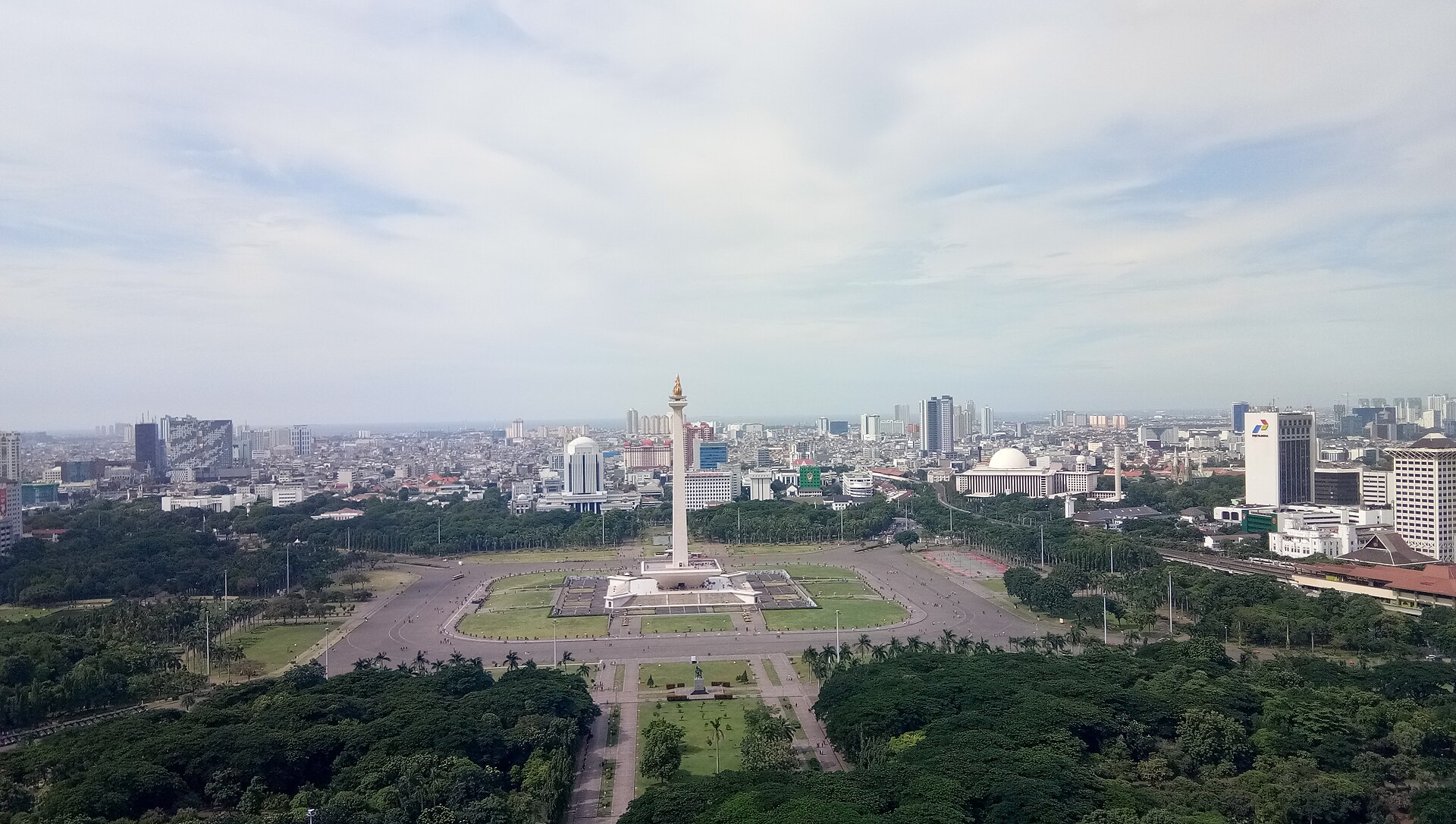
Indonesia, the country with the most Muslims in the world and one of the United States’ key partners in Southeast Asia, is living through an unusual political crisis. Its vice president, Gibran Rakabuming Raka, 39, the son of former President Joko Widodo, known as Jokowi, told President Prabowo Subianto of his intention to leave office. The reason: a legal dispute over whether his studies abroad truly amount to a high school diploma, a legal requirement to be a candidate.
A meeting of more than two hours
On Tuesday, November 10, Gibran met with Prabowo at the Presidential Palace complex in Jakarta for about two and a half hours. Afterward, State Secretariat Minister Prasetyo Hadi confirmed that the vice president raised the possibility of resigning.
Prabowo neither accepted nor rejected the proposal. According to Hadi, the president gave him advice and recommended that he keep defending the validity of his academic documents through legal channels, before the State Administrative Court. For now, Gibran remains vice president. Speaking to the press, he avoided talking about resignation and said: “I respect all the criticism and opinions of the public about what is happening.”
The origin: a diploma under suspicion
Gibran studied at Orchid Park Secondary School in Singapore and at UTS Insearch in Australia, and earned a bachelor’s degree from the Management Development Institute of Singapore. Indonesian election law requires candidates to have completed high school or an equivalent course of study. That is where the problem began.
- October 7: the Constitutional Court rejected a petition to disqualify him, but noted there was no convincing evidence that his foreign qualification was equivalent to Indonesian high school. It also said it could not void his office because he had already been sworn in.
- October 30: the Supreme Court accepted a cassation appeal against the certificate recognizing that equivalence. Gibran announced he will challenge it.
- Parliament: about 50 lawmakers from six blocs signed a proposal to activate the “right to express an opinion,” the first step toward a possible impeachment process.
- Key rule: 25 legislators are enough to start that procedure, but it only becomes an official position if approved by a plenary session with at least two-thirds of the members present.
The shadow of Jokowi
This crisis cannot be understood without the figure of his father. Joko Widodo, a very popular former president, backed Prabowo’s candidacy after Prabowo chose Gibran as his running mate in 2024. That choice was already controversial: the young man was only able to run thanks to a ruling by the Constitutional Court, then presided over by his uncle by marriage, that loosened the age requirement.
Today, Prabowo and Jokowi are in an ever-deepening political rift. Widodo himself faces accusations that he used a fake university diploma, which he denies. There is also a separate investigation into senior police officials accused of spying on the president, although, according to the AP, the resignation offer does not appear to be related to that case.
Why it matters to the United States
Indonesia has more than 270 million people, controls sea lanes through which a good part of world trade passes and is a central piece in the contest between Washington and Beijing for influence in Asia. The crisis is breaking out just as President Trump travels to the region for the ASEAN summit. A stable Indonesian government aligned with the rules of the democratic game is good news for American interests; one paralyzed by scandals is not.
Conclusion
The Gibran case leaves a lesson that applies to any country: the rules that apply to an ordinary citizen must also apply to the son of a president. If the courts confirm that he did not meet the requirements, Indonesia will have to resolve it through the channels of its Constitution. What is at stake is not just an office, but the confidence of millions of Indonesians that their institutions do not bend to political dynasties.
Quotes in this article were translated back from the Spanish version and may differ slightly from the original English wording.
Sources
- NPR / AP: Indonesia’s VP offers resignation as questions mount over his eligibility
- Indonesia Business Post: Gibran offers to resign as 50 lawmakers push parliamentary motion
- The Star: Indonesia VP Gibran expresses intent to step down
Photo: Ramayoni / Wikimedia Commons (CC BY-SA 4.0)
📱 Get the What US News app

Scan the code with your phone or go to whatusnews.com/app. Free for Android and iPhone. How to install it.


Conversation