

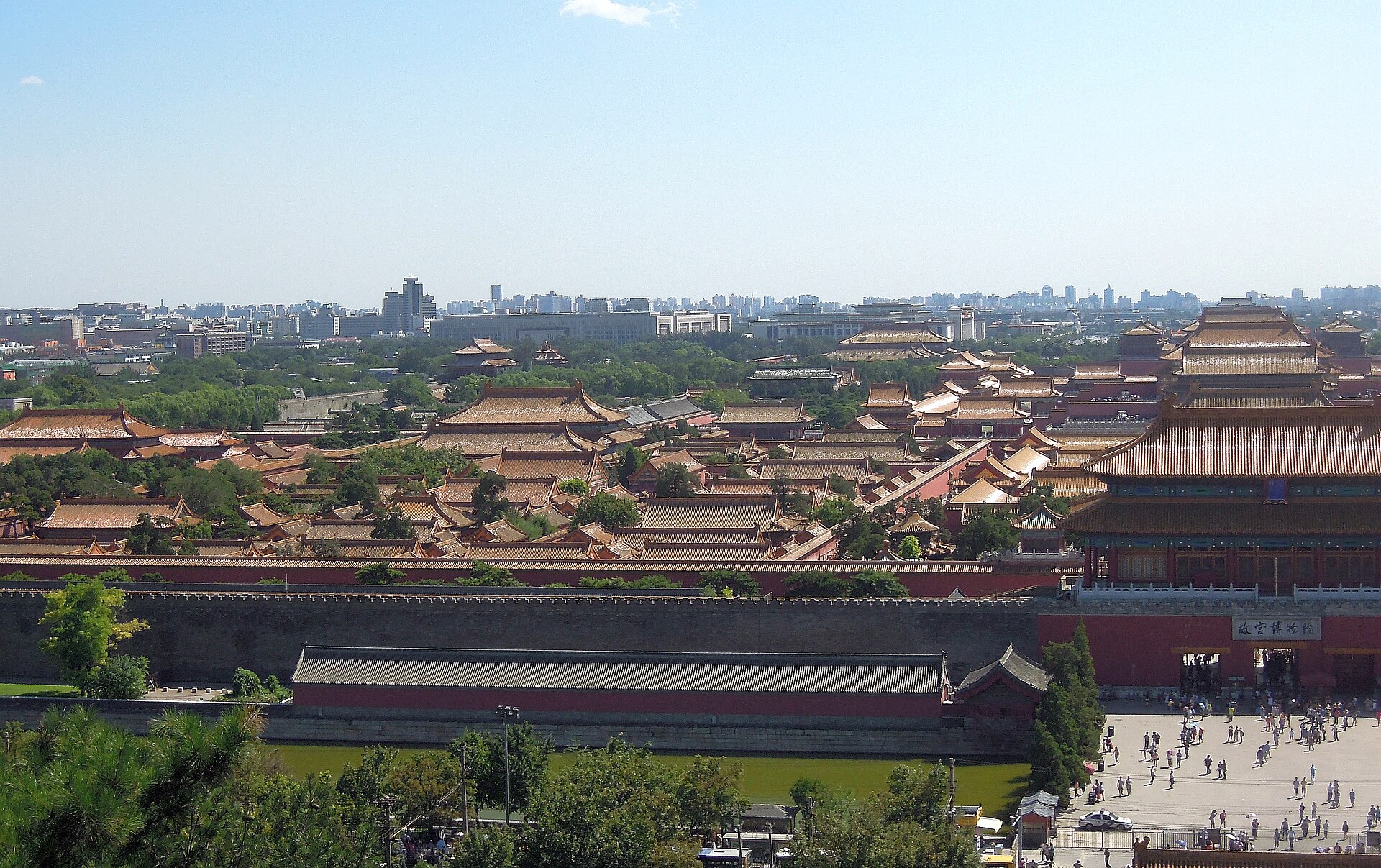
Chinese President Xi Jinping has once again called for the peaceful “reunification” of Taiwan with China. At the Great Hall of the People in Beijing he said that goal will be fulfilled and defended the formula of “one country, two systems.” In his 2026 New Year’s message he went further: he said reunification is “unstoppable.” To understand why Beijing talks this way, one has to look at more than three centuries of history.
Five thousand years of civilization
Evil and crime always find a reason to harm the weakest and most honest. For centuries humanity has accepted its enslavement as a binding command or a divine punishment, and some, influenced by the media and propaganda, look for more earthly culprits, such as capitalism.
Perhaps reality is not so mysterious. China is one of the oldest civilizations in the world, with thousands of years of cultural, political and social evolution. Under the Qin dynasty (221-206 B.C.), Emperor Qin Shi Huang unified China as a centralized empire, standardized writing and began the great work we know today as the Great Wall. Other dynasties carried on that greatness, among them the Yuan, of Mongol origin, and the Ming. The Qing dynasty (1644-1912), of Manchu origin, was the last.
The Opium Wars and the “century of humiliation”
Under the Qing came the Opium Wars (1839-1842 and 1856-1860), which pitted the empire against the Western powers, Britain first and later France as well. With them began what the Chinese call the “century of humiliation.”
British merchants, with the East India Company in the lead, sold opium grown in India in China, even though the empire had banned it. When the emperor ordered the opium seized and burned in Canton, Britain responded with military force. British naval and technological superiority crushed the Chinese defenses. Defeated, China signed the Treaty of Nanking in 1842: it ceded the island of Hong Kong, opened five ports to foreign trade and ended Canton’s trade monopoly. The aim was clear: to weaken the Chinese empire.
How Taiwan was separated from the mainland
The Qing dynasty conquered Taiwan in 1683 and brought it into the imperial administration. More than two centuries later, after losing the First Sino-Japanese War, the Qing ceded it to Japan in 1895. The island remained under Japanese control for 50 years, until the end of World War II in 1945.
From 1927, mainland China was living through a civil war between two sides:
- The Kuomintang, the nationalists of Chiang Kai-shek. On losing the war, their government and part of their army fled to Taiwan in 1949.
- The Chinese Communist Party, led by Mao Zedong, which with its victory proclaimed the People’s Republic of China in 1949.
- In 1955, the U.S. Congress passed the “Formosa Resolution,” which authorized President Eisenhower to defend Taiwan and the nearby islands.
- In 1971, the UN voted to give China’s seat to the People’s Republic, and Taiwan was left out of the organization.
Since then, Taiwan has operated autonomously, with its own government, its Constitution and its democracy, under the official name Republic of China. Over time, most countries broke their diplomatic ties with Taipei in order to recognize Beijing.
“One country, two systems”
Beijing has proposed the “one country, two systems” formula since the 1980s, and applied it in Hong Kong and Macau. What is new is the insistence with which Xi presents it as a national reconciliation that, according to him, nobody will be able to stop. The government in Taipei, for its part, rejects that formula and maintains that the island’s future must be decided by its citizens.
The island was always a bargaining chip with China. For many, history is returning to where it began: the mainland and the island as a single nation. It would be another conflict closing and another chain breaking with the old powers that, from the City of London, dominated the world’s trade and wars.
Conclusion
China remembers its imperial past and the humiliations of the nineteenth century, and sees in Taiwan the last open wound of that era. A new stage is opening, and the hope of an agreement is back on the table. Success remains to be seen, but for Beijing unification is inevitable.
Quotes in this article were translated back from the Spanish version and may differ slightly from the original English wording.
Sources
- NBC News: Xi vows reunification with Taiwan at the Great Hall of the People
- Al Jazeera: China’s Xi says reunification with Taiwan “unstoppable”
- U.S. Department of State: the First Opium War and the Treaty of Nanking
Photo: Güldem Üstün / Wikimedia Commons (CC BY 2.0)
📱 Get the What US News app

Scan the code with your phone or go to whatusnews.com/app. Free for Android and iPhone. How to install it.
Conversation