

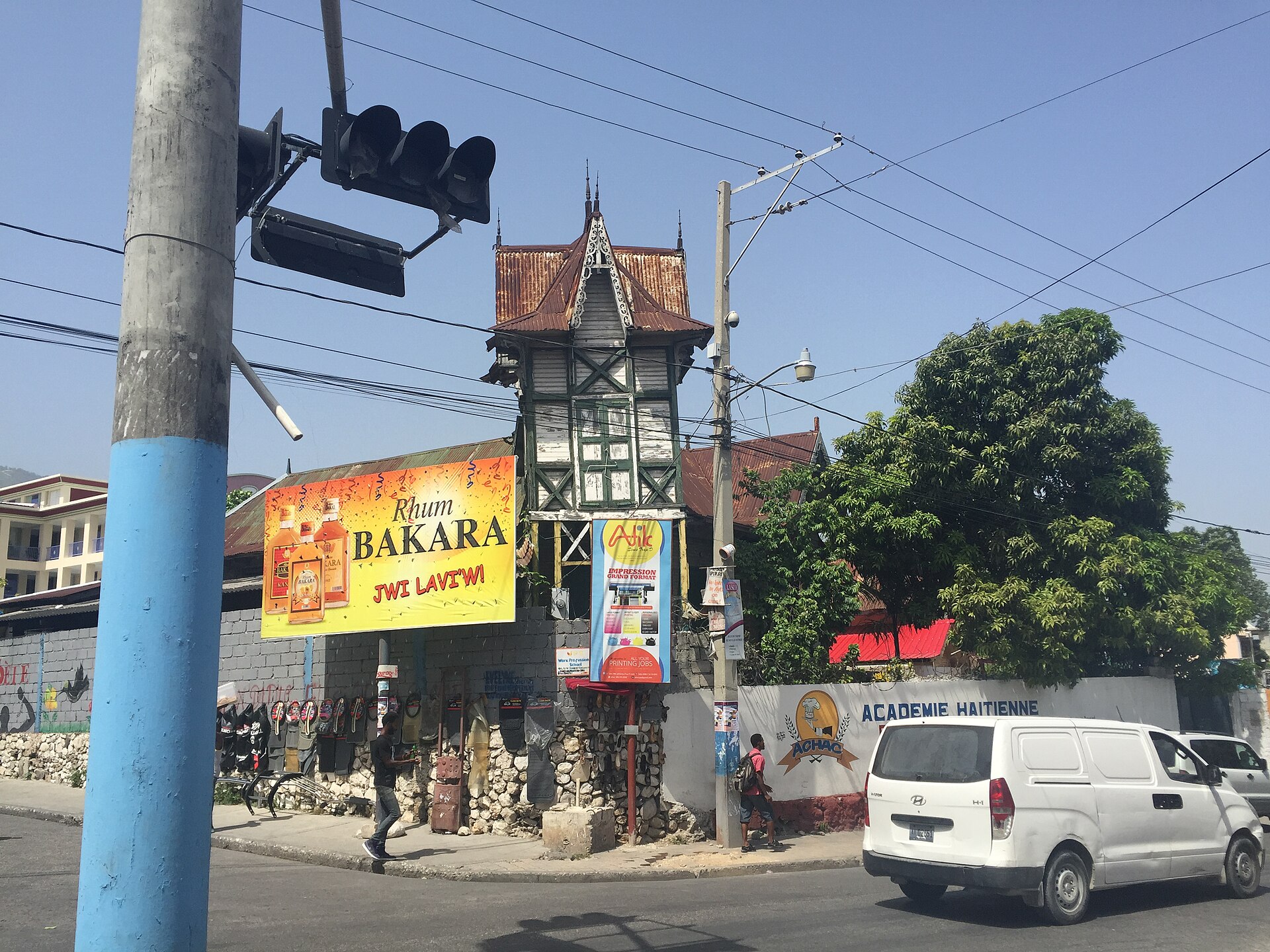
The subject of Haiti has many sides. For some, the Dominican Republic should shoulder its neighbor’s crisis; for certain Dominican politicians, that idea is a lie spread on social media. Others criticize Nayib Bukele because, according to them, he takes orders from Trump and his real plan is to prepare the ground for the Dominican Republic to take over Haiti. There are also those who blame the United States for all of Haiti’s misfortunes, and those who point to Jean-Bertrand Aristide as the father of the armed gangs he used for his political protection. There is only one reality, with different versions, and it can be summed up in a few essential points.
Duvalier and the invasion that came from Cuba
François Duvalier came to power through the ballot box in 1957. His regime was harsh, with the feared militia of the Tontons Macoutes, but the country did not know the gangs that today control Port-au-Prince. The greatest danger of that era came from Havana.
On August 13, 1959, a group of about 30 armed men in olive-green uniforms, which had set out from Cuba and was led by Capt. Rangel Guerrero, known as “the Mexican,” landed in southern Haiti, in the area of Les Irois. Their mission was to join the expeditionaries who had landed in the Dominican Republic in June against Trujillo. The Haitian army and the Tontons Macoutes defeated them in a few days: on August 19, 25 expeditionaries were killed, and the five survivors were captured and returned to Cuba months later through the mediation of the OAS.
Radio Progreso and Castro’s plans
As early as March 1959 it was known that Haitian exiles were training in Havana. Col. Alberto Bayo, the former Spanish officer who had trained Castro in Mexico, was in charge of the strategy to invade the Dominican Republic. Taking on Trujillo was not easy: he had patrol boats and British-made Vampire aircraft. That is why the idea was to go in through Haiti, which was more poorly armed, and set up guerrillas in the mountains along the border.
From Radio Progreso, a 5,000-watt Havana station, Louis Déjoie, the candidate who lost the 1957 election to Duvalier, called for rebellion several nights a week in French and in Creole.
Aristide, Clinton and the boat people at Guantánamo
Fidel Castro did not achieve his goals, but he anticipated what would come later at the hands of Jean-Bertrand Aristide. A Salesian priest and follower of liberation theology, Aristide confronted the dictatorship of Jean-Claude Duvalier, the son. He reached the presidency in 1991, but months later, facing strong opposition, he was overthrown by Gen. Raoul Cédras and left for Venezuela.
- George H. W. Bush faced a massive wave of Haitians fleeing by sea: many were intercepted and sent back.
- More than 30,000 Haitians ended up at the Guantánamo naval base, in Cuba, in an immigration limbo.
- Bill Clinton, with the backing of the UN, isolated Gen. Cédras by pointing to the killings and human rights violations, and in 1994 returned Aristide to power.
Years later the Clinton Foundation and the UN missions would arrive as well. That is how what many call the business of poverty was born: decades of international aid without the country climbing out of misery.
Bukele in Haiti: is order arriving?
In the fall of 2026, all eyes turned to El Salvador. After four Salvadoran military technicians disappeared in a gang ambush on October 18, 2026, Bukele sent more than 2,000 soldiers to Haiti, with armored vehicles and helicopters. Only about 200 are part of the Gang Suppression Force authorized by the UN. Bukele says the gangs no longer have the advantage, and he has circulated videos of his soldiers being greeted with joy by Haitian residents. Others, such as Doctors Without Borders, warn that the fighting is leaving civilian victims.
Conclusion
The pursuit of the gangs has split their forces, and the population is beginning to take to the streets to reclaim its country. Opposing positions never disappear in politics, because interests are diverse, but the voice of the people speaks. The results will tell us whether Bukele’s plan works to rebuild a country from its rubble and give Haiti back its greatness.
Quotes in this article were translated back from the Spanish version and may differ slightly from the original English wording.
Sources
- Al Jazeera: El Salvador’s Bukele touts military intervention in Haiti
- TIME (1959): Haiti in the middle, caught between Castro and Trujillo
- CubaNet (in Spanish): the Cubans who disappeared in the 1959 expedition to Haiti
Photo: Yoni Rubin / Wikimedia Commons (CC BY 3.0)
📱 Get the What US News app

Scan the code with your phone or go to whatusnews.com/app. Free for Android and iPhone. How to install it.
Conversation