

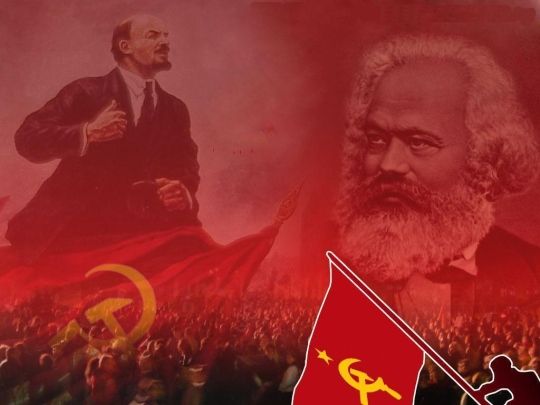
On a day like today, November 9, 1989, thousands of Berliners poured into the streets and crossed a wall that for 28 years had split their city in two. That night it was not just a concrete wall that fell: communism began to collapse across Eastern Europe. Thirty-seven years later, the story of the Berlin Wall is still a lesson about what happens when a government has to lock in its own people so they do not leave.
A city split in two
At the end of World War II, Germany was divided among the victors. The western part, backed by the United States, France and the United Kingdom, became the Federal Republic of Germany, a democracy with a free economy. The eastern part, occupied by the Soviet Union, became the German Democratic Republic (GDR), a communist state. Berlin, the capital, lay inside the Soviet zone, but it was divided too: its western half was an island of freedom surrounded by the communist bloc.
The problem for the communist regime was simple: people were leaving. Between 1949 and 1961, about 2.5 million East Germans fled to the West, many of them young people, doctors, engineers and skilled workers. Berlin was the easiest way out.
The night of the barbed wire
In the early hours of August 13, 1961, GDR soldiers and police suddenly sealed the border with barbed wire. In the following days they began to build the wall. The communist government called it the “anti-fascist protection wall,” but everyone knew the truth: it was not built to keep anyone from coming in, but to keep anyone from getting out.
Over the years, the wall grew into a system of about 155 kilometers (96 miles) encircling West Berlin, with watchtowers, dogs, alarms and a strip of land Berliners called “the death strip.” According to the Berlin Wall Foundation, at least 140 people died at the wall or because of the GDR’s border regime while trying to escape.
“Tear down this wall”
In 1963, President John F. Kennedy visited Berlin and declared his solidarity with the city with his famous phrase in German: “Ich bin ein Berliner.” But it was another American president who put the wall on the ropes. On June 12, 1987, in front of the Brandenburg Gate, Ronald Reagan spoke directly to the Soviet leader: “Mr. Gorbachev, tear down this wall!”
Many considered that speech a needless provocation. History proved Reagan right. His policy of peace through strength, with a strong defense and economic pressure on the Soviet Union, left the communist bloc gasping for air.
The mistake that changed history
In 1989, the communist bloc was in crisis. Hungary had opened its border with Austria and thousands of East Germans were escaping that way. In the cities of the GDR, hundreds of thousands of people came out to protest every week. On November 9, a government spokesman, Günter Schabowski, announced new travel rules at a press conference. When a journalist asked when they took effect, he hesitated, checked his papers and answered that, as far as he knew, they took effect immediately.
It was a mistake: the plan was to apply them the next day and in an orderly way. But the news spread on television, and that same night thousands of Berliners showed up at the border crossings demanding to leave. The guards, without clear orders and overwhelmed by the crowd, ended up opening the gates. That night people hugged, cried and climbed onto the wall with hammers to break it to pieces.
What came next
- October 3, 1990: Germany was reunified as a single country, free and democratic.
- 1989 and 1990: the communist governments of Poland, Czechoslovakia, Hungary, Bulgaria and Romania fell one after another.
- December 1991: the Soviet Union dissolved and the Cold War ended.
Conclusion
The Berlin Wall is the clearest proof of what communism means: a system that needs walls, guards and bullets to keep its people from escaping. On the other side was freedom, and when the people had the chance, they chose it without hesitating. For the Cubans, Venezuelans and Nicaraguans who live in the United States today, this story is not a distant one: it is their own. Remembering November 9, 1989, is remembering that no wall lasts forever when a people decides to be free.
Sources
- Berlin Wall Foundation: the victims of the Wall
- Ronald Reagan Presidential Library: remarks at the Brandenburg Gate (1987)
- Encyclopaedia Britannica: the Berlin Wall
📱 Get the What US News app

Scan the code with your phone or go to whatusnews.com/app. Free for Android and iPhone. How to install it.
Conversation