

Florida Attorney General James Uthmeier announced on Friday, November 13, that the state law banning bump stocks is unconstitutional and that his office will stop defending on appeal the convictions based on it. It is an important decision for gun owners in the state and reopens a debate that began in 2018. But before getting into the controversy, it helps to explain exactly what a bump stock is.
What is a bump stock?
A bump stock is a special stock that is fitted onto a semiautomatic rifle. A semiautomatic weapon fires a single round each time the trigger is pulled. The bump stock does not change that: what it does is harness the recoil of the shot so that the weapon moves slightly back and forth.
The shooter keeps the trigger finger still, resting in place, and pushes the weapon forward with the other hand. With each recoil, the trigger “bumps” against the finger and fires again. That produces very rapid shots, which by various estimates can reach between 400 and 800 a minute, depending on the weapon. Even so, technically each shot still requires the trigger to be released and pressed again, and that is why it does not turn the rifle into an automatic weapon.
- It is not a machine gun: the weapon still fires one round for each movement of the trigger.
- It is an accessory part: it replaces the rifle’s original stock.
- Its defenders say they use it for lawful purposes.
From Las Vegas to the Supreme Court
Bump stocks became widely known after the Las Vegas shooting of October 1, 2017, in which 60 people died and twelve of these devices were found at the scene. After the massacre at Marjory Stoneman Douglas High School in Parkland, Florida, in February 2018, President Donald Trump ordered the ATF to treat them as machine guns. The federal ban took effect in March 2019.
But in June 2024, in Garland v. Cargill, the Supreme Court struck down that rule by a 6-3 vote. Justice Clarence Thomas explained that the ATF had exceeded its authority, because a bump stock does not meet the legal definition of a machine gun in the National Firearms Act of 1934. Since then, they are legal again at the federal level, although several states keep their own bans.
What Florida says now
Florida’s ban, section 790.222 of the state statutes, was born in 2018 as part of the Marjory Stoneman Douglas High School Public Safety Act, signed by then-Gov. Rick Scott. That law also raised the minimum age to buy rifles from 18 to 21 and created the “red flag” law. Possessing or selling a bump stock in Florida is punishable by up to five years in prison.
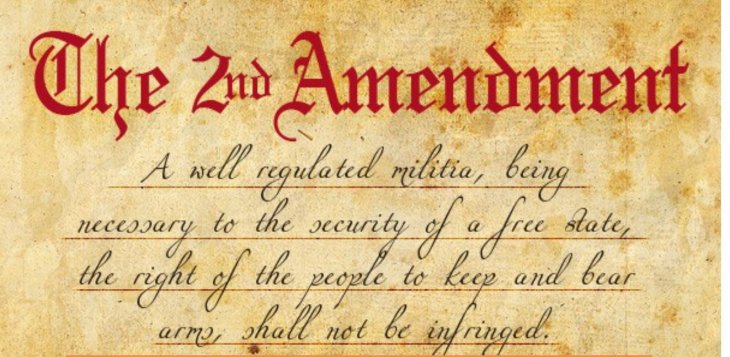
In his legal opinion, Uthmeier argues that the statute imposes a total ban on an entire category of firearm components and that it violates the Second Amendment. He recalled that Scott said when signing it that everyone has to give a little, and answered that the Constitution allows very little compromise when it comes to fundamental rights. Governor-elect Byron Donalds, who voted against the law in 2018, has criticized its gun control measures.
Note: the law is still on the books. The Legislature has not repealed it and no court has struck it down. What changes is that the attorney general’s office will not defend the convictions when they are appealed.
Conclusion
Uthmeier’s decision is a victory for those who defend the Second Amendment and believe law-abiding citizens cannot be punished with prison for using a part that the Supreme Court itself said does not turn a rifle into a machine gun. Now the ball is in the court of the Florida Legislature, which will have to decide whether to repeal the ban. God bless America.
Quotes in this article were translated back from the Spanish version and may differ slightly from the original English wording.
Sources
- CBS Miami: Florida’s attorney general considers the bump stock ban unconstitutional
- News 6 (ClickOrlando): Florida AG takes a stand against 2018 bump stocks law
- Wikipedia: Bump stock
📱 Get the What US News app

Scan the code with your phone or go to whatusnews.com/app. Free for Android and iPhone. How to install it.

Conversation