

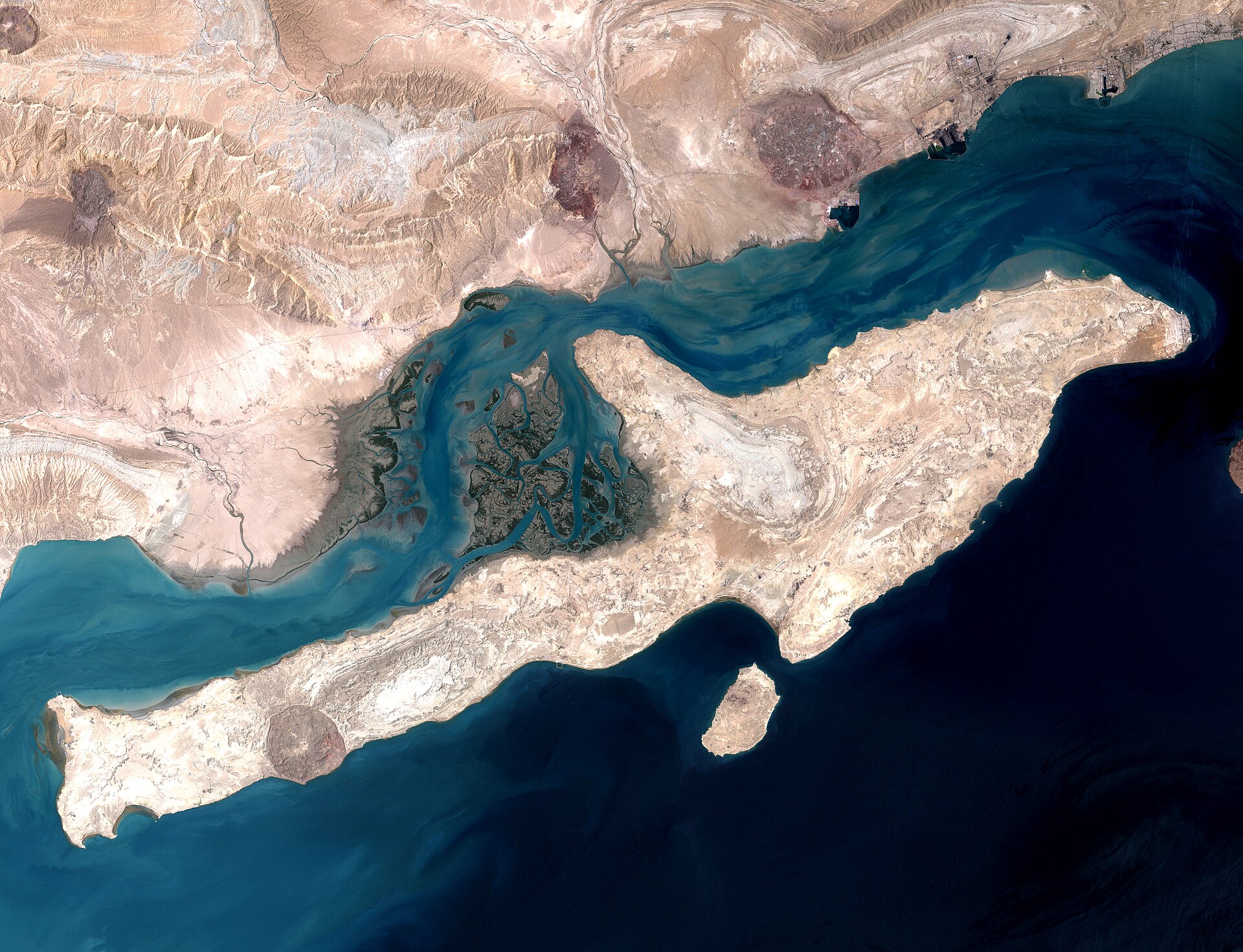
Tension in the Persian Gulf went up another notch. On Tuesday, November 17, a U.S. fighter jet struck a missile launch base of Iran’s Revolutionary Guard on Qeshm Island, right in the Strait of Hormuz. It was the response to Iranian attacks on an American radar in Bahrain.
Tehran’s reaction came in the early hours of Wednesday: drones against Ali Al Salem Air Base in Kuwait, where U.S. troops are stationed, and new attacks on Bahrain.
The strike on Qeshm
Qeshm is the largest island in the Persian Gulf and sits right at the entrance to the Strait of Hormuz, through which close to a fifth of the world’s energy passed before the war. The Revolutionary Guard has missile launchers there that threaten ships and bases in the region.
It is not the first time the area has been in the crosshairs. The Revolutionary Guard uses the islands of the strait as platforms to threaten tanker traffic, and since October attacks on ships in the area have soared. Hitting those launchers is a direct way to protect troops and shipping.
A U.S. military official explained that the strike was a response to Iran’s aggression against American personnel and equipment. Iranian media, for their part, claimed the bombing did not damage any infrastructure.
The Iranian response
The Iranian military said it targeted U.S. drone and missile facilities at Ali Al Salem base. Kuwait reported that its air defenses intercepted the drones and that there was no immediate damage. It was the first Iranian attack on Kuwait since September.
Bahrain, home to the U.S. Navy’s Fifth Fleet, said it intercepted Iranian attacks for the third time this week and accused Tehran of maintaining a systematically hostile attitude.
- Tuesday: a U.S. fighter jet strikes an Iranian missile base on Qeshm Island.
- Wednesday: Iran launches drones at Ali Al Salem base in Kuwait.
- Bahrain intercepts Iranian attacks for the third time in a week.
- Saudi Arabia shot down cruise missiles that Yemen’s Houthis fired at Riyadh.
- In the Strait of Hormuz, an attack on an Emirati tanker left 11 injured and one crew member missing.
Iran’s allies are firing too
The escalation does not stop with Iran. Yemen’s Houthi rebels, allies of Tehran, fired cruise missiles at Riyadh, which Saudi defenses intercepted. They also said they sent five drones against pumping stations on Saudi Arabia’s East-West pipeline.
At sea, the Emirati oil company ADNOC reported that one of its tankers was attacked on Tuesday in the strait: one crew member is missing and 11 are injured. Iran keeps attacking ships, while the U.S. Navy escorts tankers and maintains the naval blockade.
Diplomacy, stalled
The war began on February 28 and negotiations remain stuck despite Qatar’s mediation. Iranian Foreign Minister Abbas Araghchi visited Oman to discuss maritime corridors, but there is no agreement in sight.
Trump said new bombings are very unlikely, but he sent a third aircraft carrier and thousands more soldiers to the region. The message is clear: the United States is not looking for a bigger war, but it will not sit still if its troops are attacked.
Conclusion
The Iranian regime keeps playing with fire. It attacks bases, tankers and neighboring countries, and then complains when it gets a response. The strike on Qeshm shows that Washington answers every act of aggression with precision and without hesitation. As long as Tehran does not understand that the way forward is the negotiating table and not drones, the pressure and the blockade will continue.
Sources
- RTÉ: Iran attacks Gulf neighbours after US strike on Qeshm
- The Boston Globe (AP): Iran widens Gulf attacks by targeting a US air base in Kuwait and sites in Bahrain
- The New Arab: After US hits Qeshm, Iran targets US bases in Kuwait and Bahrain
📱 Get the What US News app

Scan the code with your phone or go to whatusnews.com/app. Free for Android and iPhone. How to install it.

Conversation