

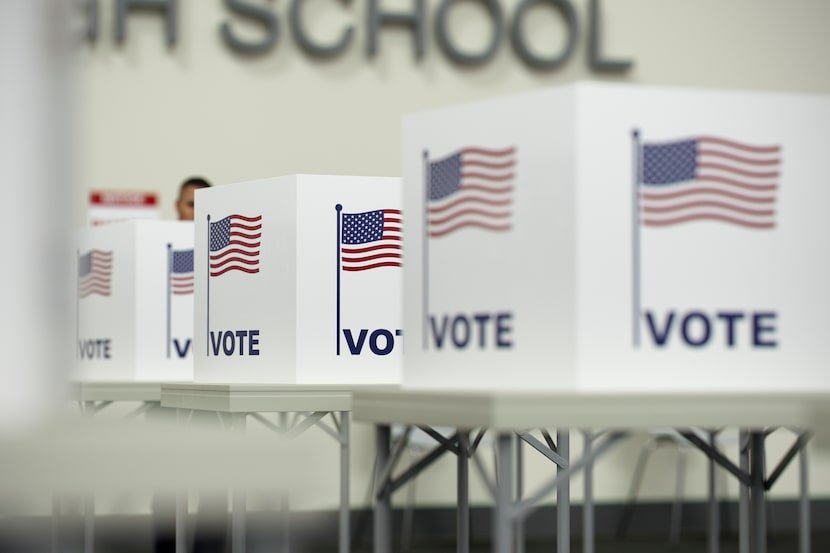
The November 3 elections left a hard result for Republicans: Democrats took back the House of Representatives and the Senate. But anyone who looks only at the seats misses the other half of the story. At the same ballot boxes, millions of voters, even in Democratic states, approved measures that defend conservative principles: voter ID, citizen-only voting and protection of women’s sports.
These are the results of the ballot measures, according to data compiled by Ballotpedia.
Voter ID: a clear majority
- Ohio (Issue 3): approved with 65% of the vote. It requires photo ID to vote.
- Nevada (Question 7): approved with 62%. It requires a photo when voting in person or the last four digits of a driver’s license or Social Security number when voting by mail. Nevada is a battleground state, not a Republican stronghold.
- North Carolina: approved with 60%. It extends photo ID to all voters, including those who vote by mail.
- Oklahoma (SQ 846): approved with 55% in the August vote.
Not everything was a victory. In Arizona, Proposition 144 failed with 47% in favor; in California, Proposition 39 got 41%; and in Colorado, Amendment 84 came in at 37%. Even so, the overall message is clear: asking for a document in order to vote remains a common-sense idea for most Americans.
Only citizens decide
Five states wrote into their laws or constitutions that only citizens of the United States can vote in their elections:
- West Virginia: 80% in favor.
- Alaska: 70%.
- Arkansas: 69%.
- Kansas: 64%.
- South Dakota: 62%.
Although federal law already bars foreigners from voting in federal elections, some cities have allowed noncitizens to vote in local elections. These amendments close that door at the state level.
Women’s sports, protected even in Democratic states
Perhaps the most striking news of the night came from two states that usually vote Democratic:
- Washington (Initiative 638): approved with 56%. It bars biologically male students from competing on girls’ teams.
- Colorado (Proposition 134): approved with 52%. It separates school and college teams by biological sex, except coed ones.
- Colorado (Proposition 135): approved with 52%. It bans sex-change surgeries on minors under 18.
- Nebraska (Measure 442): approved with 68%.
- Arizona (Proposition 318): approved with 59%. It requires school bathrooms, locker rooms and showers to be used according to sex.
In Missouri, by contrast, Amendment 3, which combined a ban on abortion with a ban on transition treatments for minors, was rejected with 55% against.
The lesson for conservatives
These results show something important: conservative ideas still command a majority when they are presented to voters clearly and directly. The exit poll reported by National Review itself indicated that 52% of voters believe the transgender rights movement has gone too far.
The problem on November 3 was not principles, but other factors, such as the cost of living, which weighed more heavily on voters’ decisions. For the conservative movement, the challenge of the next two years is to reconnect those majorities with the ballot box: defending election integrity, the family and common sense, while also answering to families’ wallets.
Sources
- Ballotpedia: 2026 ballot measures
- Ballotpedia: election results, 2026
- National Review: “Why Republicans Lost” (Jim Geraghty, November 6, 2026)
📱 Get the What US News app

Scan the code with your phone or go to whatusnews.com/app. Free for Android and iPhone. How to install it.

Conversation