

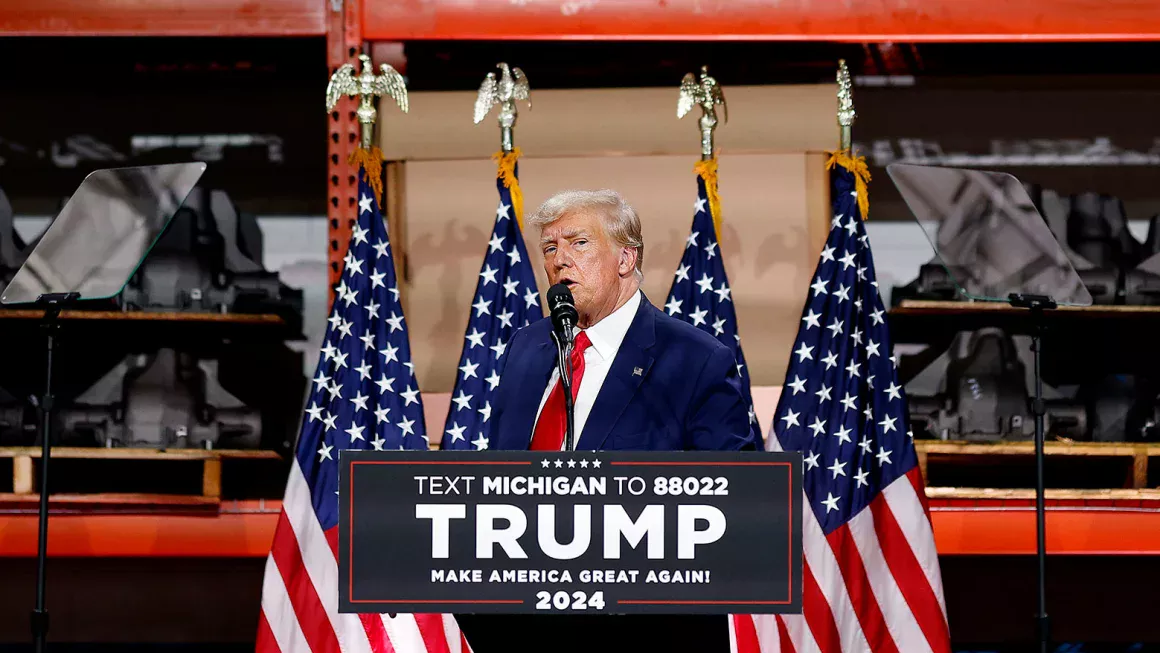
On November 3 Democrats won a broad victory: starting in January they will control the House of Representatives and the Senate. Many media outlets are already talking about the end of President Donald Trump’s agenda. But anyone who knows how the American system works knows the story does not end here. The Constitution gives the president powerful tools, and Trump is not a man who gives up.
What the ballot box left behind
According to CBS News projections, Democrats will have at least 54 seats in the Senate and around 256 in the House when the new Congress is seated in January. It is a clear majority, but it is not enough to govern over the president’s head.
Trump himself gave his explanation in his first long interview after the elections: the main reason for the Republican defeats was that he was not on the ballot. And it makes sense. In 2016 and in 2024, when his name appeared, voters responded. Without Trump, many Republican candidates failed to mobilize that same base.
The veto: the key that remains in the president’s hands
For a law to take effect without the president’s signature, Congress needs to override the veto with two-thirds of the votes in both chambers: 67 senators and 290 representatives. With about 54 senators and about 256 representatives, Democrats are far from that number.
That means any attempt to undo the tax cuts, reopen the border or raise spending without control will have to cross the president’s desk. And it can stop there.
The tools Trump keeps
- The veto, which can only be overridden with two-thirds of each chamber.
- Executive orders, to direct federal agencies on issues such as the border and energy.
- Foreign policy, where the president is the commander in chief and the country’s chief negotiator.
- The bully pulpit, the ability to speak directly to the American people.
What the vote said, beyond the parties
As we explained in a previous article, in the ballot measures held that same November 3, voters approved measures such as voter ID and the protection of women’s sports. In other words, many of the ideas the MAGA movement defends still have majority support, even though Republican candidates lost that day.
That is the message Democrats should not ignore: winning an election is not the same as convincing the country that your ideas are better.
The two years ahead
It is very likely that the new majority will use its power to open investigations into the administration. Several Democratic leaders have already announced it. But the American people also voted for solutions: lower prices, security and a strong economy. If Congress spends two years going after the president instead of working, voters will remind them of it in 2028.
In the meantime, Trump will keep governing with the tools the Constitution gives him, as other presidents have done with Congress against them, from Ronald Reagan to Bill Clinton.
Conclusion
A defeat in the midterm elections is not the end of a presidency. It is the beginning of a new, harder stage, in which the president will have to negotiate, use the veto firmly and speak directly to the people. Trump has already shown he knows how to get back up after a fall. The question is not whether he will keep fighting to make America great again, but how much it will cost Congress to try to stop him. God bless America.
Sources
- CBS News: 2026 midterm election results
- NBC News: Democrats win control of Congress
- Constitution of the United States, Article I, Section 7 (the presidential veto)
📱 Get the What US News app

Scan the code with your phone or go to whatusnews.com/app. Free for Android and iPhone. How to install it.


Conversation