

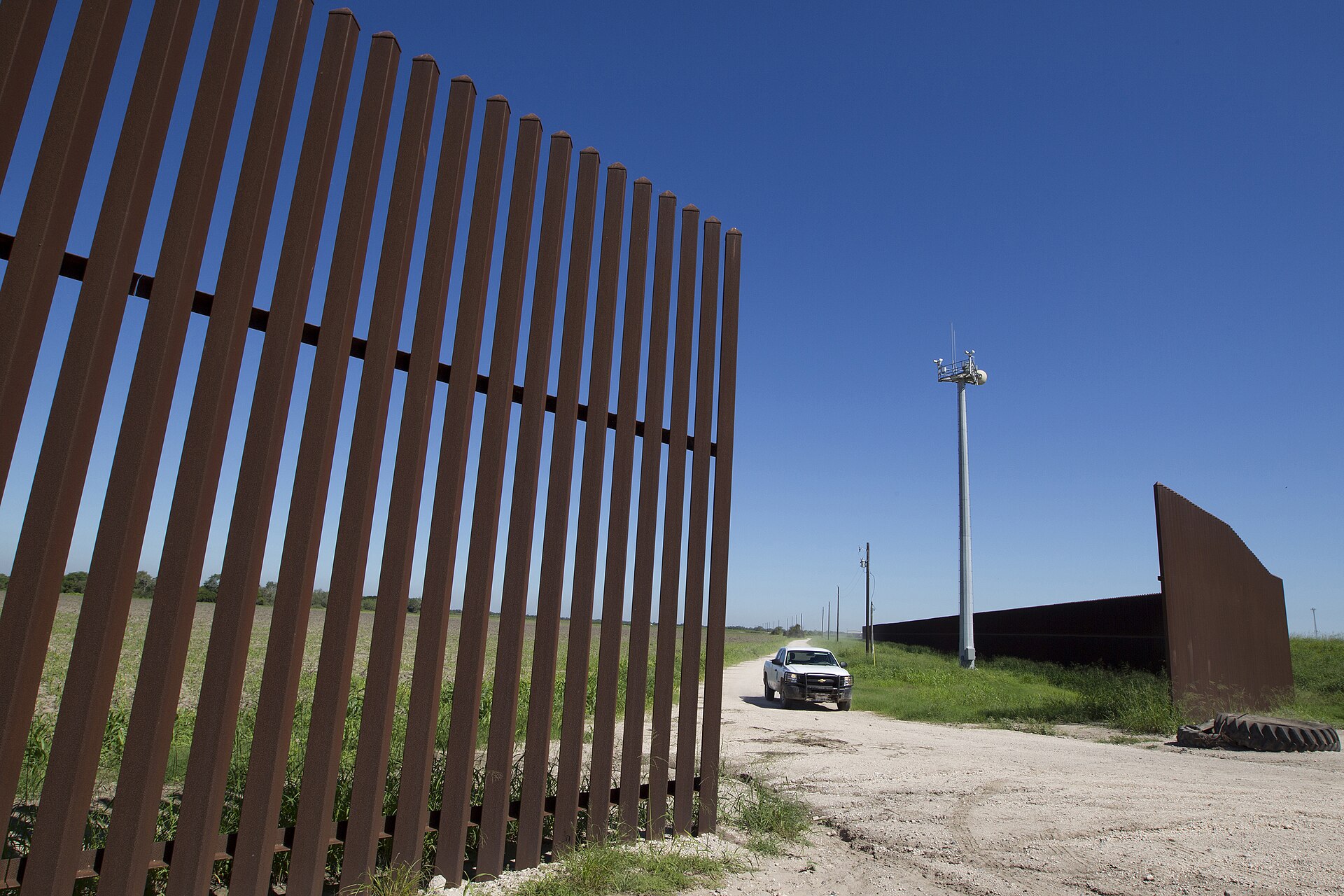
The U.S. Supreme Court on Monday, November 9, allowed President Donald Trump’s administration to resume building border barriers and roads in the Big Bend region of West Texas. With a single dissenting voice, that of Justice Ketanji Brown Jackson, the high court put on hold the order of a federal court that had stopped the work. It is an important victory for those of us who believe an uncontrolled border is an open door to the cartels.
What the Court decided
The order, which was not signed by any particular justice, sets aside for now the injunction issued on October 2 by the District Court for the Western District of Texas. That court had immediately halted all construction-related activity in the area, including Big Bend National Park and the lands along the Rio Grande.
The Supreme Court’s central argument is technical, but forceful. Federal law only allows environmental waivers for border construction to be challenged on constitutional grounds. The plaintiffs tried to present as constitutional what was really a dispute over whether the Homeland Security secretary exceeded his legal authority. The court’s answer was clear: there is no such thing as a “constitutional” major questions claim. In other words, the Texas court probably did not even have jurisdiction to stop the wall.
Who sued and why
The lawsuit was filed by the Center for Biological Diversity, the organization Friends of the Ruidosa Church, which preserves a historic church in Ruidosa, Texas, and a local river guide. All of them challenged the decision by Homeland Security Secretary Markwayne Mullin to exempt the project from several environmental and conservation rules.
Environmentalists reacted harshly. Laiken Jordahl, of the Center for Biological Diversity, said the ruling seals the permanent destruction of the wildest place in Texas. Even outgoing Republican Sen. John Cornyn opposed the project in an op-ed and argued for a combination of technology, personnel and cooperation with local authorities.
The wall by the numbers
The project is no small thing. These are the key figures:
- Congressional Republicans approved $46 billion last summer for the wall.
- Customs and Border Protection (CBP) is putting up about 12 miles of barriers a week.
- The Big Bend stretch covers around 500 miles of the border, which totals roughly 2,000.
- According to a CBP official, the stoppage was costing the government almost $500,000 a day in unrecoverable expenses.
- The government says it does not plan steel walls inside the national park, where only a road and vehicle barriers were contemplated.
The administration also paused work inside the park in August and promised to present a final plan for that area. In other words, this is not a project moving ahead blindly, but one that has made adjustments and can now go forward.
Why closing the Big Bend gap matters
Critics repeat that Big Bend has the lowest rate of migrant apprehensions on the entire southern border. But that argument forgets something basic: when one door is closed, traffic looks for another. The government maintains that illegal crossings and drug seizures do take place in Big Bend, and that leaving that stretch without a barrier would turn the area into the traffickers’ new preferred route. CBP chief Rodney Scott said it bluntly: without a wall, the area would quickly be overrun by the cartels.
The Court also took border security interests into account and concluded that Congress gave priority to rapid construction over the harms alleged by the plaintiffs. That is exactly what the people’s representatives voted for.
What comes next
The stay remains in place while the government asks for the case to be reviewed in full. If the Court decides not to hear it, the stay ends automatically; if it takes the case, the work can continue until there is a final ruling.
Conclusion
With an 8-1 vote, the Supreme Court reminded the lower courts that they cannot manufacture arguments to stop a law passed by Congress. President Trump promised to secure the border from end to end, and every mile of wall that goes up is a promise kept. Protecting the landscape is valuable, but protecting American families from drug trafficking and illegal immigration is more valuable still.
God bless America.
Quotes in this article were translated back from the Spanish version and may differ slightly from the original English wording.
Sources
- OPB / AP: Supreme Court clears the way for border wall construction in Texas’s Big Bend to resume
- FOX 4: Supreme Court allows Big Bend border wall construction to proceed, pauses injunction
- ABC News 4: Supreme Court rules 8-1 to restart Big Bend border wall work despite lawsuit
Photo: U.S. Customs and Border Protection / Wikimedia Commons (Public domain)
📱 Get the What US News app

Scan the code with your phone or go to whatusnews.com/app. Free for Android and iPhone. How to install it.
Conversation